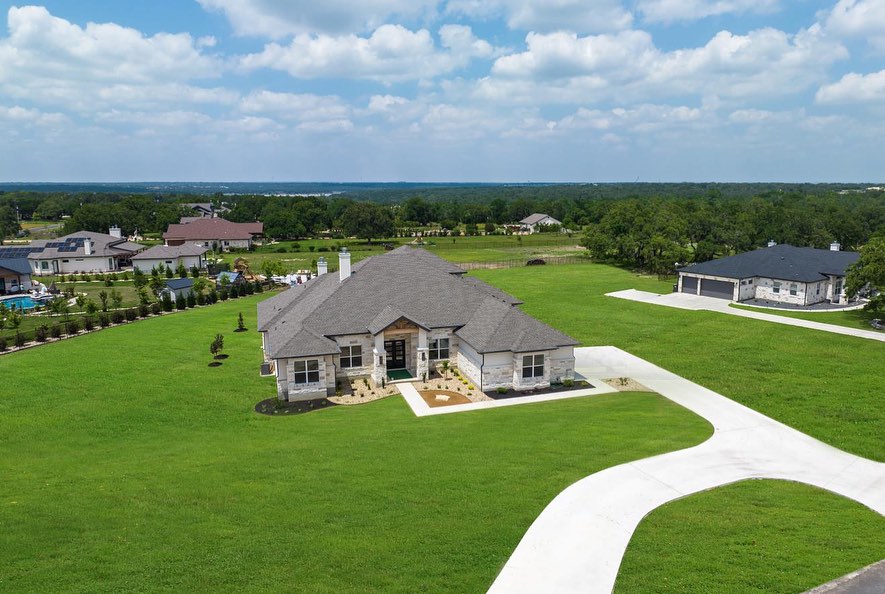
Chance Leigh custom Hill Country estate with beautiful native limestone facades
Acreage Lot Feasibility Guide

Acreage Lot Evaluation Guide: Know Your Land Before You Build.

The essential physical lot checklist for rural land owners in Williamson County. Learn how to install OSSF septics, drill Trinity Aquifer wells, and clear limestone bedrock.

On-Site Lot Evaluations Included
OSSF Septic & Aquifer Well Experts
Geotechnical Foundation Core Testing Standard
Lot Evaluation Realities

Building Infrastructure on Rural Williamson County Lots

For acreage land owners, the biggest challenge when embarking on a custom build is developing your own private infrastructure. Traditional subdivisions provide standardized developer utility lines ready for hookup at the street. Building a custom home on raw acreage in unincorporated Georgetown, Leander, or Liberty Hill means you take charge of your own septic setup, fresh water wells, electrical runs, and site drainage — the full Build On Your Lot service exists for exactly this. Designing a home on these sprawling lots requires a high level of physical coordination before you order materials.

At Chance Leigh Custom Homes, we believe that detailed physical lot evaluations are crucial. Siting a custom home is not just a matter of selecting a scenic ridge view. It requires analyzing soil plasticity, mapping rock depth, surveying environmental offsets, and routing utility lines to keep development costs low (see what custom building actually costs). This in-depth lot evaluation guide provides acreage land owners with a clear technical checklist to ensure a safe, cost-efficient, and long-lasting build. Planning your budget is the first step in our collaborative journey.

Technical Lot Evaluation

The Rural Lot Feasibility Checklist

Every acreage property has unique physical and regulatory setbacks. Here is what we evaluate before breaking ground:

01

Geology, Soils, & Core Testing

Central Texas geology is split by the Balcones Fault. Building east of IH-35 requires engineering concrete piers standard to anchor post-tension slab foundations into bedrock limestone, mitigating heaving clays. Building west of IH-35 on solid limestone requires mapping excavation depth for utilities to control rock-hammering costs.

Post-tension bedrock piering standard
02

Drilling Trinity Aquifer Water Wells

Securing water requires drilling private fresh water wells deep into the Trinity Aquifer. This requires calculating exact drilling depths (typically 400 to 600 feet on regional ridges), sizing submersible pumps, mapping trench electrical runs, and engineering secondary storage tanks to guarantee high pressure during peak home use.

Positioning deep wells & storage tanks
03

OSSF Septic Setbacks & Aquifer Rules

Unincorporated properties require private On-Site Sewage Facility (OSSF) septic systems. Rocky soils and Edwards Aquifer Recharge Zone guidelines dictate advanced aerobic septic systems with wastewater spray loops. Septic design requires mapping out strict setbacks (e.g. septic lines must remain 100 feet clear of all fresh water wells).

OSSF aerobic setbacks compliance

Eliminating Blueprint Anxiety with Interactive 3D Solar Mapping

Most custom buyers face a quiet anxiety: signing off on a stack of flat, black-and-white 2D blueprints while struggling to visualize how the rooms will actually feel. When you cannot visualize the height of a ceiling, the flow of a hallway, or the placement of window views, you are highly vulnerable to making costly change orders mid-build once the framing is already up.

We solve this blueprint anxiety by building your entire custom layout in an interactive three-dimensional pre-visualization model. Before a single tree is cleared or yard of concrete is poured, we render your actual cabinetry, exposed timber cedar truss joints, and custom limestone masonry.

Furthermore, we map the exact longitude and latitude of your lot to run seasonal sun path simulations. This walkthrough shows you exactly where natural morning light will pool inside your home seasonally. Designing window cross-ventilation around the prevailing southerly breezes provides maximum thermal efficiency, ensuring your home remains easy and comfortable to live in year-round.

How Direct Draws Simplify Infrastructure Budgets

Developing private utilities on raw acreage requires substantial upfront coordination and steady subcontractor scheduling. Commercial banks frequently drag out this process, requiring extensive paperwork and slow third-party inspections before releasing draws. When utility contractors have to wait weeks for payment, construction slows down, and frustrated tradesmen walk off-site. Installing water wells and septic loops becomes a long, stressful process.

Because we fund custom builds directly through in-house construction financing, Chance Leigh reviews and signs off on draw benchmarks immediately. Utility tradesmen are paid instantly upon completed stages, keeping the best local Central Texas drillers and OSSF installers committed to your site. This direct funding keeps the build schedule moving seamlessly, saving you months off your overall construction timeline and ensuring your private infrastructure is engineered safely and correctly.

Acreage Access & Drainage Engineering: Culverts, Swales, and Compaction

Building a rural home on acreage requires a comprehensive site-grading strategy to protect the foundation from sheet flow and storm runoff. Unlike tight municipal lots with curbed streets, rural land depends entirely on natural topography and engineered surface drainage. Designing the home involves carving out a series of gently sloped drainage swales to intercept rainwater upslope and redirect it around the building envelope. This keeps water from pooling against the post-tension foundation slab. Furthermore, the driveway design must accommodate the county's public right-of-way stormwater flow. Positioning the driveway entrance requires calculating appropriate culvert sizing—typically utilizing a reinforced concrete pipe of 18 to 24 inches in diameter—to ensure proper roadside drainage under heavy rain events.

Constructing an acreage driveway also presents structural challenges. Because rural driveways often span hundreds of feet from the main road to the home site, building them correctly is vital. A high-performance driveway requires clearing existing topsoil down to a solid clay or rock base, followed by deep subgrade compaction. We apply a minimum of 6 inches of crushed limestone road base (flex base), compacted in layers, before applying the final asphalt, concrete, or chip-and-seal coat. Skimping on the driveway foundation leads to premature rutting, washing out, and settling under the weight of heavy concrete delivery trucks and framing rigs. Designing a durable structural foundation for your driveway protects your home access for decades.

Lot Answers

Frequently Asked Questions About Lot Preparation

We believe in honest, direct answers. Here are the real land questions custom buyers ask:

How far must a private water well sit from a septic system?

Under Texas environmental codes and Williamson County health guidelines, a private fresh water well must maintain a minimum physical setback of 100 feet from all OSSF septic lines, absorption loops, and spray fields to prevent contamination. Planning these utility systems requires careful planning before clearing land.

Does eastern Williamson County clay require concrete pier foundations?

Yes. Eastern Williamson County heaving clays consist of highly active clay that expands aggressively when wet. Building in these zones requires conducting soil core drillings standard and anchoring post-tension slabs directly to Cretaceous bedrock with concrete piers to prevent slab heaving and home cracking.

How deep must a water well be drilled in Liberty Hill / Georgetown?

Most private fresh water wells in western Williamson County must be drilled to depths of 400 to 600 feet to reach the stable Middle Trinity Aquifer water-bearing stratum. Positioning the well requires coordinating with county water districts and sizing submersible pumps.

Lot Evaluation

Request an On-Site Lot Walk

Ready to walk your custom lot, map out OSSF septics, check Trinity water wells offsets, or evaluate geotechnical clay soils? Let's walk the soil together. Chance Leigh responds personally to all inquiries.

Direct Line 512-848-1185
Email Inbox [email protected]

Your information goes to Chance — not a sales team, not a mailing list.