01
Read Georgetown Guide →
Georgetown Builder
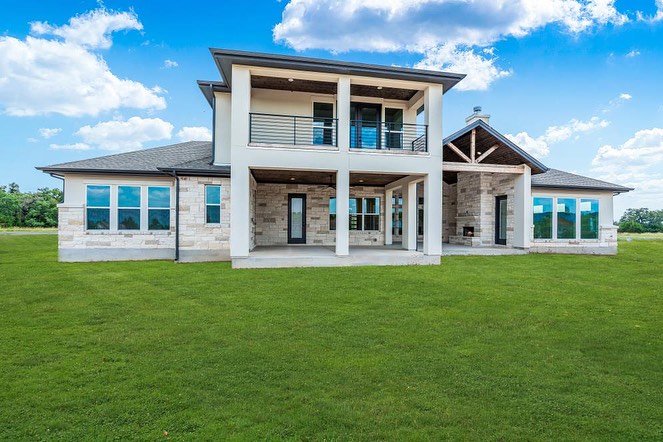
Our home base. Navigating HARC historic commission setbacks, hand-laid cream limestone cladding, and Blackland clay post-tension foundations standard.
A comprehensive technical guide to acreage site preparation, custom foundation engineering, and private infrastructure development across Central Texas.
Ready to walk your Williamson County lot, review OSSF septic permits, map water wells, or analyze clay foundation soils? Let's walk the soil together. Chance responds personally.
Williamson County features a fascinating and challenging geological landscape divided directly by the inactive Balcones Fault Zone, running parallel to Interstate 35. Building a home on either side of this dividing line changes your foundation engineering, site preparation costs, and construction timeline. At Chance Leigh Custom Homes, we do not guess when it comes to the structural integrity of your home. We perform site-specific geotechnical core drillings on every lot to map out soil profiles.
To the east of IH-35, the county is dominated by the highly active Blackland Prairie clays. These high-plasticity soils shrink and swell aggressively with changes in regional moisture, exerting upward swelling pressures of up to 10,000 lbs/sq ft. If a builder pours a standard, shallow concrete slab on active clay, the foundation will heave, warp, and crack the home's framing and finishes. To prevent shifting, we anchor post-tension concrete foundations deep into the solid Cretaceous bedrock stratum using heavy concrete piers.
To the west of IH-35, the soil thins out, resting on solid Glen Rose and Edwards limestone shelves (Cedar Park, Leander, and Liberty Hill). While this limestone provides an incredibly stable foundation that does not move, it presents structural excavation challenges. Excavating trenches for plumbing, utility mains, and septic tanks requires specialized stone trenchers and heavy pneumatic rock hammers. Chance Leigh manages these variables personally, supervising structural core drills and layout placement to manage earthmoving costs and deliver absolute structural safety.
Building a custom home on raw acreage outside municipal utility limits in Williamson County requires developing your own private infrastructure — the focus of our acreage lot evaluation guide and Build On Your Lot service. This requires careful, face-to-face site engineering before a single framing board is ordered. Designing a private septic system is one of the most critical aspects of your lot evaluation. Because much of the county lies near the environmentally sensitive Edwards Aquifer recharge zone, standard gravity septic fields are often prohibited.
At Chance Leigh, we design advanced aerobic On-Site Sewage Facility (OSSF) systems that utilize wastewater spray fields and specialized absorption loops. We coordinate directly with county health officers and the Texas Commission on Environmental Quality (TCEQ) to secure environmental permits. Installing these systems requires strict adherence to environmental setbacks—for example, septic spray loops must remain a minimum of 100 feet clear of all fresh water wells to prevent contamination.
Furthermore, securing a clean, high-flow water source is the lifeblood of your rural custom build. We coordinate the drilling of private water wells deep into the Middle Trinity Aquifer water-bearing stratum. Drilling the well requires calculating exact drilling depths (typically 400 to 600 feet on regional ridges), sizing submersible pumps, mapping trench electrical runs, and configuring secondary storage tanks to guarantee high pressure during peak home use.
Seven cities, one builder — but they are not interchangeable, and choosing between them is half the project. The shorthand we give buyers on a first call: west of IH-35 (Georgetown’s lake corridor, Leander, Liberty Hill, Cedar Park) buys limestone ground, Hill Country views, and top-rated school districts at the county’s highest land prices. East of IH-35 (Hutto, and east Round Rock) buys serious acreage per dollar on clay that demands real foundation engineering — with the Samsung corridor rising next door. Old Town Georgetown is its own animal: historic-district character, walkable to the Square, governed by HARC review. Each guide below covers the ground truth — soil, permits, schools, and what your budget actually buys there:
Our home base. Navigating HARC historic commission setbacks, hand-laid cream limestone cladding, and Blackland clay post-tension foundations standard.
Historic-district infill and renovation inside the HARC review zone — Certificates of Appropriateness, period-correct masonry, and new construction that belongs beside century-old neighbors.
Building acreage homes near Brushy Creek watershed channels, complying with Tree Technical Manual preservation regulations, and serving RRISD families.
Excavating stable foundations on the Glen Rose limestone shelf, managing dual-county permitting setbacks, and serving tech commuting professionals.
Building along the South Gabriel river basin, meeting Leander SmartCode landscaping rules, and designing custom floor plans with mudrooms for acreage lots.
Developing raw 1-5+ acre acreage estates near Santa Rita Ranch. Drilling deep Trinity water wells, aerobic septics with wastewater spray loops, and Liberty Hill ISD.
Engineering slabs on highly active Blackland Prairie clay. Enforcing deep concrete pier foundation design, OSSF aerobic spray field layouts, and navigating Hutto permitting.
Whichever side of the fault line your land sits on, the first step is the same: Chance walks it with you.
Talk to Chance